From Approved Design to Finished Interior How Turnkey Fit Out Actually Works
What happens after design approval, from shop drawings and procurement to site execution, snagging and final handover.
Written by Ghaith Kourbi · CEO & Head of Fit-Out Execution ·

Approving the interior design is a major milestone, but it is not the end of the process. It is the point where the design must be translated into drawings, materials, orders and coordinated site work.
A turnkey project brings these stages under one managed process, from approved design and technical development through fit-out, furnishing, styling and final handover.
Turnkey delivery is less about convenience alone and more about maintaining control over the design from concept to completion.
Key Takeaways
- Long-lead items such as custom lighting, specialist stone and bespoke furniture are ordered while the site may still look unfinished.
- Shop drawings are what a fabricator builds from.
- Snagging is the final quality-control stage that identifies small problems before the client has to.
1 What Turnkey Actually Means
Turnkey means taking responsibility for turning an approved design into a completed interior rather than leaving the client to coordinate designers, contractors, suppliers and specialist trades separately. Each stage affects the next. A joinery detail may depend on lighting, while a stone installation may affect floor levels.
2 What Happens After Design Approval
The project moves into technical resolution. Detailed drawings are developed, dimensions are checked and the interior is coordinated with lighting, electrical, plumbing and air-conditioning. This is where the project changes from what should it look like to exactly how will it be built.
3 Why Shop Drawings Are Needed
Design drawings communicate design intent. Shop drawings explain how custom joinery, stonework, metalwork, feature ceilings and other specific elements will be manufactured and installed. They allow details to be resolved before production begins, when corrections are easier than they are on site.
4 How Materials and Custom Elements Are Procured
Procurement is more than placing orders. Stone, lighting, bespoke joinery and furniture may come from different suppliers, each with different production and delivery periods. Every item must be checked against the approved design, quantities and samples.
5 Why Some Items Are Ordered Early
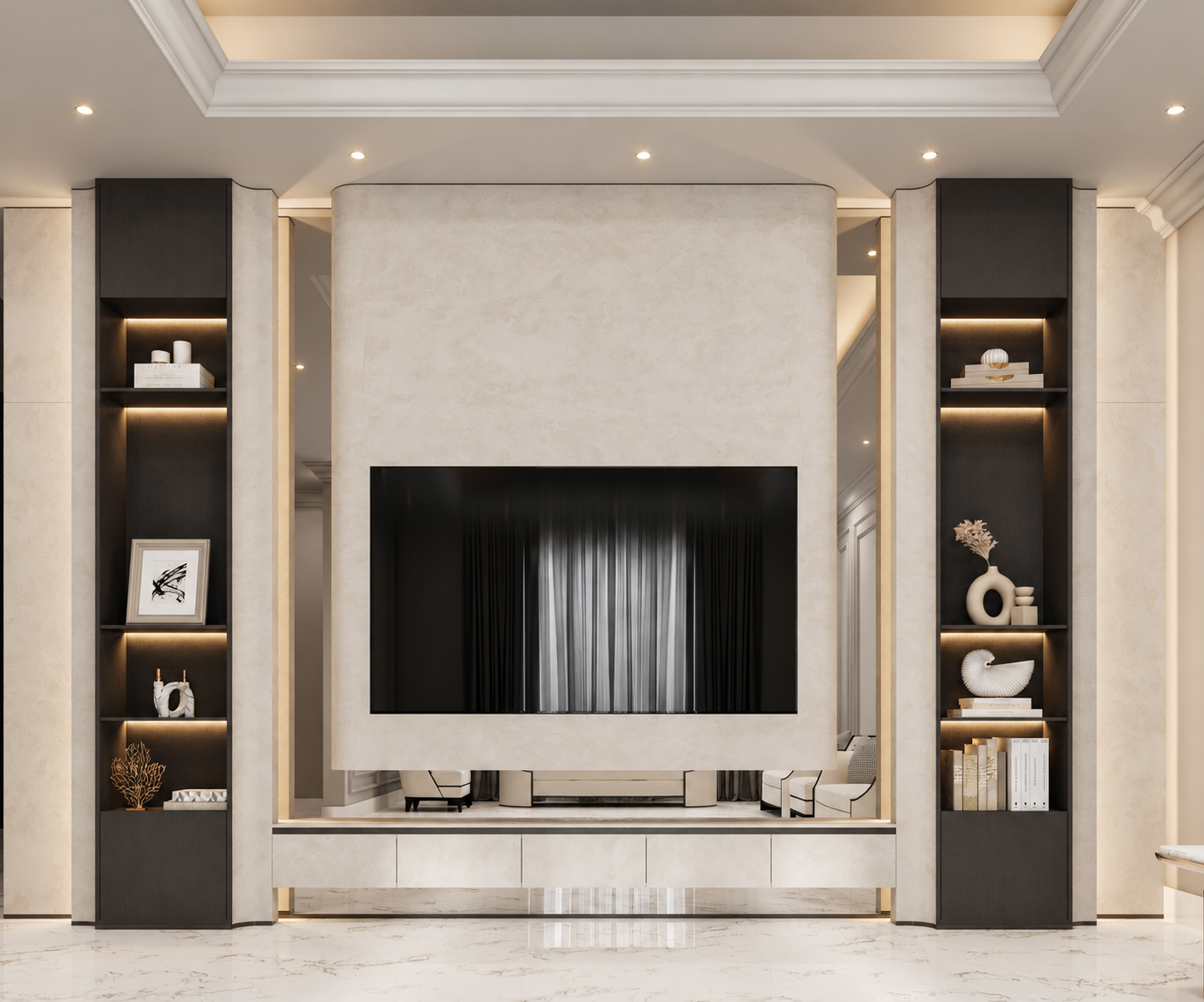
Custom lighting, specialist stone, bespoke furniture and imported finishes can require weeks or months for production and delivery. Good planning works backwards from the date an item will be needed rather than waiting until the site looks ready.
6 What Happens During Fit Out
Partitions, ceilings, flooring, lighting and finishes are completed in a carefully managed sequence. Work installed too early can be damaged by what follows, so supervision focuses on coordination as much as quality.
7 Joinery and Specialist Finishes
Joinery and specialist finishes are often where the quality of execution becomes most visible. Wall panelling, wardrobes, vanities and decorative metalwork require precision in fabrication and installation, with details adjusted to actual site conditions rather than the drawing alone.
8 What Snagging Means
Snagging is the detailed inspection carried out as the project approaches completion. The team reviews the interior for anything requiring correction, from paint imperfections to joinery adjustments, and records these items for completion before handover.
9 What Happens Before Handover
Lighting and electrical systems are checked, finishes are reviewed, furniture is positioned and the project is inspected as a whole. A successful turnkey project should reach handover feeling complete and intentional, with the original design still visible in the finished result.
Turnkey Control Points
- Approved drawings and specifications
- Shop drawings samples and sign offs
- Long lead procurement and installation sequence
- Snagging testing and handover
Turnkey delivery protects the approved design through every stage required to build it. The quality of the final interior depends on maintaining that continuity from the first technical drawing to the final inspection.
Author
Ghaith Kourbi — CEO & Head of Fit-Out Execution
Ghaith Kourbi is CEO & Head of Fit-Out Execution at Lagoon Design for Decoration, leading the technical and operational delivery of projects from pre-construction through final handover.